رحلة إلى قرية ميمند الإيرانية

رحلة إلى قرية ميمند الإيرانية

اغرب قرية لازال فيها اناس وعمرها 12الف سنة

في جنوب شرق ايران هي قرية ميمند في مدينة "شهر بابك" بمحافظة كرمان واحدة من بين سبع قرى عجيبة في ايران وأحد أقدم


المناطق السكنية الأثرية في العالم حيث ماتزال قائمة منذ اثني عشر ألف سنة


نقره لعرض الصورة في صفحة مستقلة


نقره لعرض الصورة في صفحة مستقلة


نقره لعرض الصورة في صفحة مستقلة


نقره لعرض الصورة في صفحة مستقلة


نقره لعرض الصورة في صفحة مستقلة


نقره لعرض الصورة في صفحة مستقلة


نقره لعرض الصورة في صفحة مستقلة


نقره لعرض الصورة في صفحة مستقلة
 

لینک رحله الی قریه میمند

Prehistoric Troglodytic Village

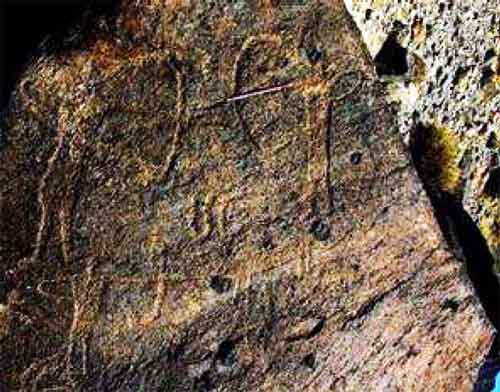
Meymand (also spelt Maymand and Maimand) is a village of troglodytes - cave dwellers - located in the south-eastern Iranian province of Kerman. Meymand (Maymand, Maimand) village has been continuously inhabited for 2,000 to 3,000 years making it one of Iran's four oldest surviving villages. By contrast the troglodytic village of Kandovan in northwest Iran is said to have been inhabited for 700 years. Some claim that Meymand / Maymand village has been inhabited for 12,000 years, that is, since the middle stone ages, making it a mesolithic village. Reportedly, 10,000 year old stone engravings and 6,000 year-old pottery have been discovered at the site.

maymand meymand میمند

Rock art from Gorgondar near Meymand / Maymand. Hunters with bows and arrows.
This image was one of the first examined by a European, French anthropologist
A. Leroi-Gourhan, who estimated the art to be 12,000 years old

The village is a UNESCO world heritage site and was awarded UNESCO's 2005 Melina Mercouri prize. UNESCO compares Meymand / Maymand with villages of Kandovan, Hille Var, Sour, Ghorveh, Vind, Tamin, Kharg Zoroastrian hypogea, Zoroastrian houses around Tabas, Jahlkhaneh in Bushehr, Kapadocia, Metra, some regions in south of England, Jordan and China.

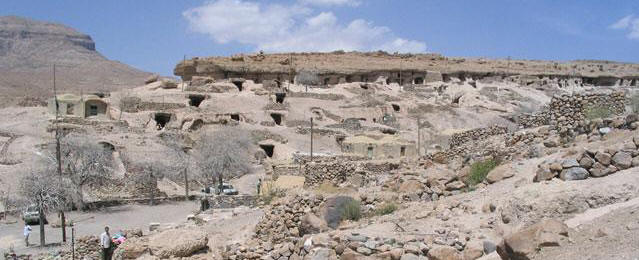
Meymand / Maymand village

Meymand / Maymand village. Image credit: Fotopages

While many Iranian desert villages are fairly non-descript in appearance most of the time (their beauty is found within the courtyards and homes), Maymand is in comparison stark in appearance and perhaps even unattractive in the usual sense. The villagers have done little to add colour to the natural earth tones of the landscape. They homes and streets have no potted flowers or ornamental plants. The village's stark appearance is complimented by Spartan life of its inhabitants. Adults wear sober coloured clothes and visitors have noted in their travel logs that they could hear no music.

The village has a present peak population of between 130 and 150 people many of whom are semi-nomadic shepherds, living in the village caves during the winter when the population is at its highest and migrating to higher pastures in the summer leaving about 60 residents in the village.


click here to find more about maymand

Maymand, the prehistoric Iranian village

Photo published by Ali Majdfar on PBase.

A small village in the south of Iran has been suspended in time for thousands of years.

The historical village of Maymand, in the province of Kerman, has been inhabited for at least 3,000 years (some people say 12,000 years, which would make it a Mesolithic village). Its 150 inhabitants, semi-nomadic people people who make a living from farming and agriculture, reside in caves dug into the rock. There are 350 of these dwellings, called “Gonbeh”, some of which have been lived in for millennia.

And yet, the climate of Maymand is far from mild. With high temperatures in summer and extremely cold winters, the village certainly deserved UNESCO’s Melina Mercouri international prize, which it was awarded in 2005, for having preserved its ancestral way of life.

Contributors
Mariam Rahim Khani

“It’s a really beautiful village…. a work of art in perfect harmony with nature”

Mariam Rahim Khani is an architecture student. She lives near Maymand, in the Kerman province.  I visited the village of Maymand as part of an organised excursion for the architecture students. Several kilometres away from the village, the road became a rough path, without any asphalt.

The village of Maymand. Photo published on Flickr by Dmehrtash on August 11, 2008.

But as soon as we arrived, we saw the magnificent houses dug into the rock.

The countryside around the village. Photo posted on Flickr by m.gemma on August 11, 2008.

Around them were pomegranate and pistachio orchards, adding a touch of green to this arid landscape. Middle-aged men and women were working in the farms.

 The Maymand mosque. Photo published by Ali Majdfar on PBase.

We went to the village mosque. It consisted of a building that two brothers had built by knocking down the wall which had separated their two houses.

The village’s cafe-restaurant. Photo published on Flickr by HORIZON on May 29, 2009.

At lunch-time, we ate in the village restaurant, the tables and chairs of which were also made of stone and wood. Not far from the restaurant were some traditional ovens used for cooking bread.

Photo published on Flickr by Dmehrtash on June 1, 2007.

Not far from the restaurant were some traditional ovens used for cooking bread.

Photo published on Flickr by Dmehrtash on July 7, 2010

The dwellings are equipped with electricity but not with air conditioning. But given that the residences dug into the rock are naturally cool, they don’t have much need of the latter.

The inhabitants of the village. Photo publised by Ali Majdfar on PBase.

These villagers live a simple life which, even though some own one or two mod cons, is almost primitive. They don’t complain and seem to have a happy existence.

The inhabitants of the village. Photo posted on Flickr by sadeghkhan on November 28, 2005.


However, we did spot several abandoned houses and we didn’t meet very many young people. A lot of people have left the village to go and work in the neighbouring village of Shar-e Babak, one hour by car from Maymand.

This is a really beautiful village, full of peace and quiet. A work of art in perfect harmony with nature.".

Mariam Rahim Khani

Maymand, between the prehistoric and the modern

A house in the village. Photo published on Flickr by Ali Majdfar on September 22, 2009. 

A henhouse in the village. Photo published on Flickr by Dmehrtash on June 1, 2007.

An inhabitant of Maymand in front of her house. Photo published on Flickr by Dmehrtash on June 1, 2007.

میمند از دیدگاه یک آلمانی

Die Abfahrt nach dem Frühstück bei schِnstem, aber kaltem Herbstwetter, verzِgert sich, da unser Guide erst noch Geschenke bei der Tourismusbehِrde abholen muss. Wir folgen der Hauptstrasse nordwنrts. Als wir an einer Kreuzung kurz halten müssen, stoppt ein Auto neben uns und ein نlterer Mann steigt aus und reicht uns einen Plastiksack mit fast einen Kilo Pistazien. Die Gegend hier ist, soweit das Auge reicht, von Pistazienbنumen, die in langen, schِn ausgerichteten Reihen wachsen, bedeckt. Wir verlassen die Hauptstrasse nach links und fahren gegen Westen. Kurz nacheinander überqueren wir zwei steile Pنsse, beide über 2400 MüM. Die Ausblicke sind toll, die wenigen Dِrfer die wir durchfahren bestehen aus wenigen Hنusern. Menschen sind, wenn überhaupt, ؤltere oder ein paar Kinder. Auf einer Holperpiste unterhalb der Strasse halten wir für Lunch. Kurz vor drei erreichen wir Maymand, die نlteste Siedlung des Irans.


Ein Blick von der gegenüberliegenden Talseite.

Noch heute leben in den Tuffsteinhِhlen meist نltere Leute, wir werden, wie überall herzlich empfangen.


Klein - aber oho!

Ein kleines 86jنhriges Mنnnchen zeigt uns seinen vierzig Quadratmeter grosse Wohnung. Sie ist fast vollstنndig mit Teppichen ausgelegt und ziemlich vollgestellt. Mittlerweile haben sie auch Strom und somit elektrisches Licht, von Heizung ist allerdings nichts zu sehen.


Ein Blick auf die Eingنnge der Hِhlen.

Im unteren Teil des Ortes - hier wird, wie überall im Land krنftig gebaut und gebuddelt, blicken wir noch kurz in die Moschee, die seit fast tausend Jahren diesem Zwecke dient.


Noch oft besucht: Moschee in Maymand.

Die Weiterfahrt nach Yazd beginnt auf einer endlosen Hochebene. Die Strasse trifft bald auf die Hauptstrasse. Die Verkehrsdichte ist unglaublich. Bei einem Halt an einer Tankstelle muss man beim ـberqueren dieser Fernstrasse hِllisch aufpassen, nicht von einem der schrill pfeifenden durchbrausenden Lastzüge plattgewalzt zu werden. Es sind meist amerikanische Modelle oder alte Mercedesse, mehrere Tankstellen haben keine Diesel mehr, so pumpt ein Sattelschlepperfahrer aus seinem Tank mit Schlauch und Luftansaugen etwas Diesel in unseren Landcruiser. Es wird dunkel. In einer ehemaligen Metzgerei, die nun für Fernbusse zu einem Restaurant "ausgebaut" wurde, essen wir zu Abend. Beim Tanken bezahlen wir für 74 Liter Diesel knapp zwei Franken. Die kurvige Strecke steigt wieder an, ِfters sehen wir das Schild "Schneeketten". Das ـberholen ist oft schwierig, dauert es doch oft fünf Minuten, bis kein Gegenverkehr - sprich keine Brummis - selten mit ausreichender Beleuchtung, uns entgegenkommen. Kurz vor halb elf, es ist mehr als nur frisch, erreichen wir das Hotel in Yazd. Ab ins Bett.

تصاویری با کیفیت بالا از میمند

جهت مشاهده بر روی لینک های زیر کلیک کنید

دورنمایی از میمند

maymand       meymand     Village House in "MAYMAND"

مسجد روستای تاریخی میمند Meymand

Historic Village of Meymand ( Maymand )

Maymand is a very ancient village which is located near to Shahr -e- Babak city, Kerman Province.
Maymand is believed to be one of human's primary residencies in Iran Plateau, dating back to 12,000 years ago and still inhabitance of around 150 people (mostly hospitable elderly) in existing 350 hand dug houses in heart of rocks, some of which have been inhabited for as long as 3000 years.
10,000 years old stone engravings around the village and discovered 6,000 years old potteries reveal long lived history of the village.
Living conditions in Maymand are harsh due to the aridity of the land and to high temperatures in summers and very cold winters.
In 2005, Meymand awarded Melina Mercury International Prize for safeguarding and management of cultural landscapes.

   Meymand  Meymand  Meymand

   Meymand     Meymand     Meymand     People of Meymand

  Meymand  Meymand  Meymand

  People of Meymand    Meymand     Maymand   Meymand

  Meymand  Meymand  Meymand

  Meymand's Mosque, Outside  Meymand's Mosque, Inside  Meymand's Mosque, Outside

  Meymand  Meymand  Meymand

  Maymand  Meymand  Meymand 

 لینکhttp://www.pbase.com/k_amj/meymand